
What do you call a market that absorbs typically negative headlines without breaking lower? A resilient one—backed by steady underlying demand.
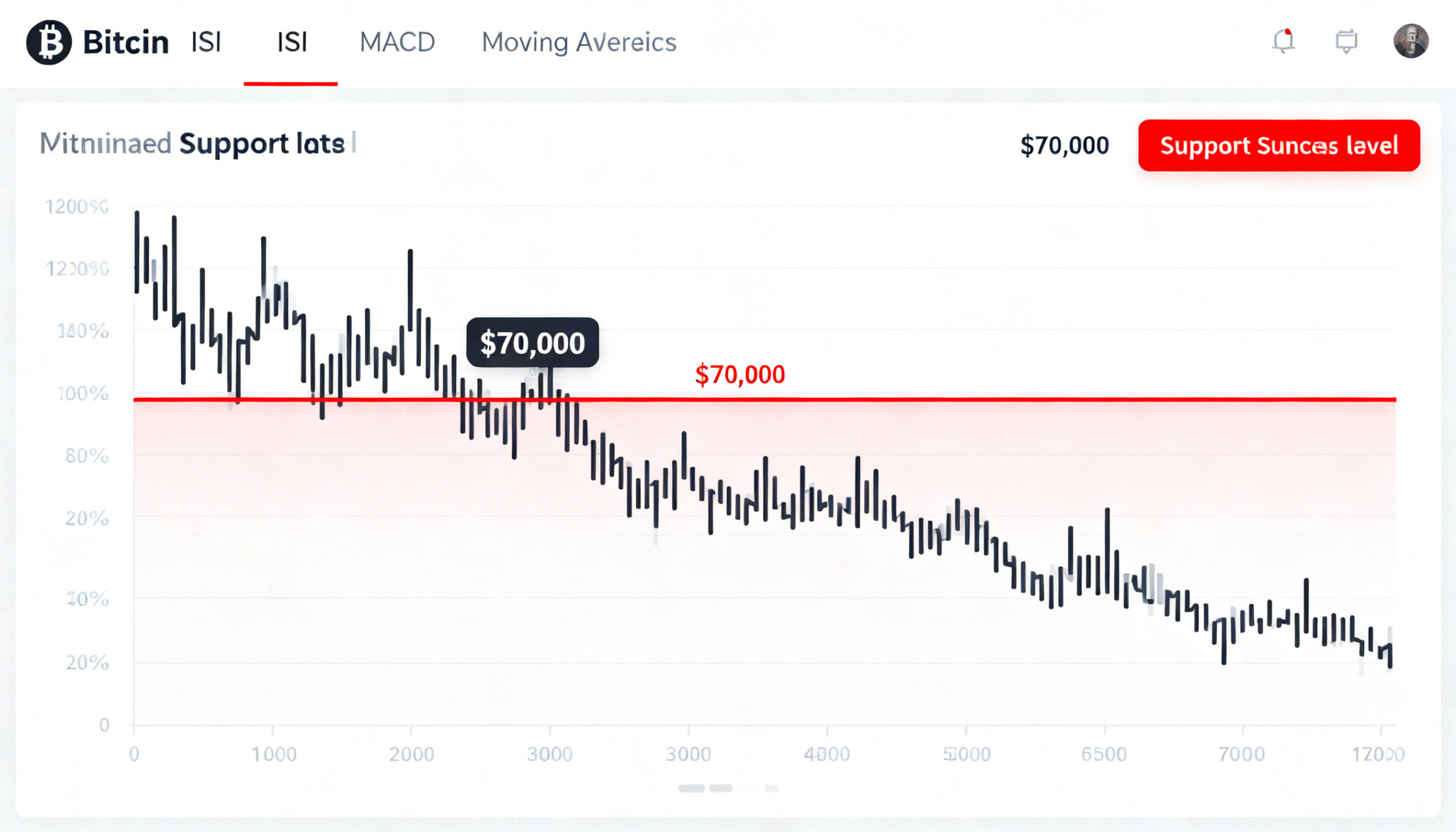
That has been the story for bitcoin in recent weeks. The cryptocurrency has held firm around the $70,000 level despite escalating geopolitical tensions tied to the Iran war, rising oil prices, and fading expectations for Federal Reserve rate cuts. On the surface, such price stability points to a strong bullish undertone.
However, not all signals align with that narrative.
One key metric flashing caution is the Coinbase Premium, which tracks the price gap between bitcoin on Coinbase and Binance. A positive premium typically indicates stronger buying pressure from U.S. institutional investors and has historically accompanied major bull runs, including bitcoin’s surge toward $100,000 in late 2024.
Currently, though, the premium has turned negative—its weakest level in over a month, according to Coinglass. This means bitcoin is trading at a discount on Coinbase, suggesting softer demand from U.S.-based investors. The shift began around March 19 and has widened since.
Another closely watched gauge—spot bitcoin ETF flows—also reflects a cooling in momentum. Data from SoSoValue shows that the 11 U.S.-listed spot bitcoin ETFs recorded $1.53 billion in net inflows this month, breaking a three-month streak of outflows. However, nearly $1.3 billion of that total came in the first half of the month, with inflows slowing sharply to just $195 million afterward.
Market watchers have emphasized that sustained and consistent ETF inflows are critical for maintaining upward price momentum.
Vikram Subburaj, CEO of Giottus, summed it up: institutional demand hasn’t disappeared—but it has become more selective and less consistent than during stronger accumulation phases.
As of the latest data from CoinDesk, bitcoin continues to trade near the $70,000 mark, holding steady—but not without underlying cracks in the bullish case.
Share this content: