The derivatives exchange operator CME Group is preparing to introduce round-the-clock cryptocurrency trading, a move analysts say will materially alter weekend liquidity and volatility patterns in digital asset markets.
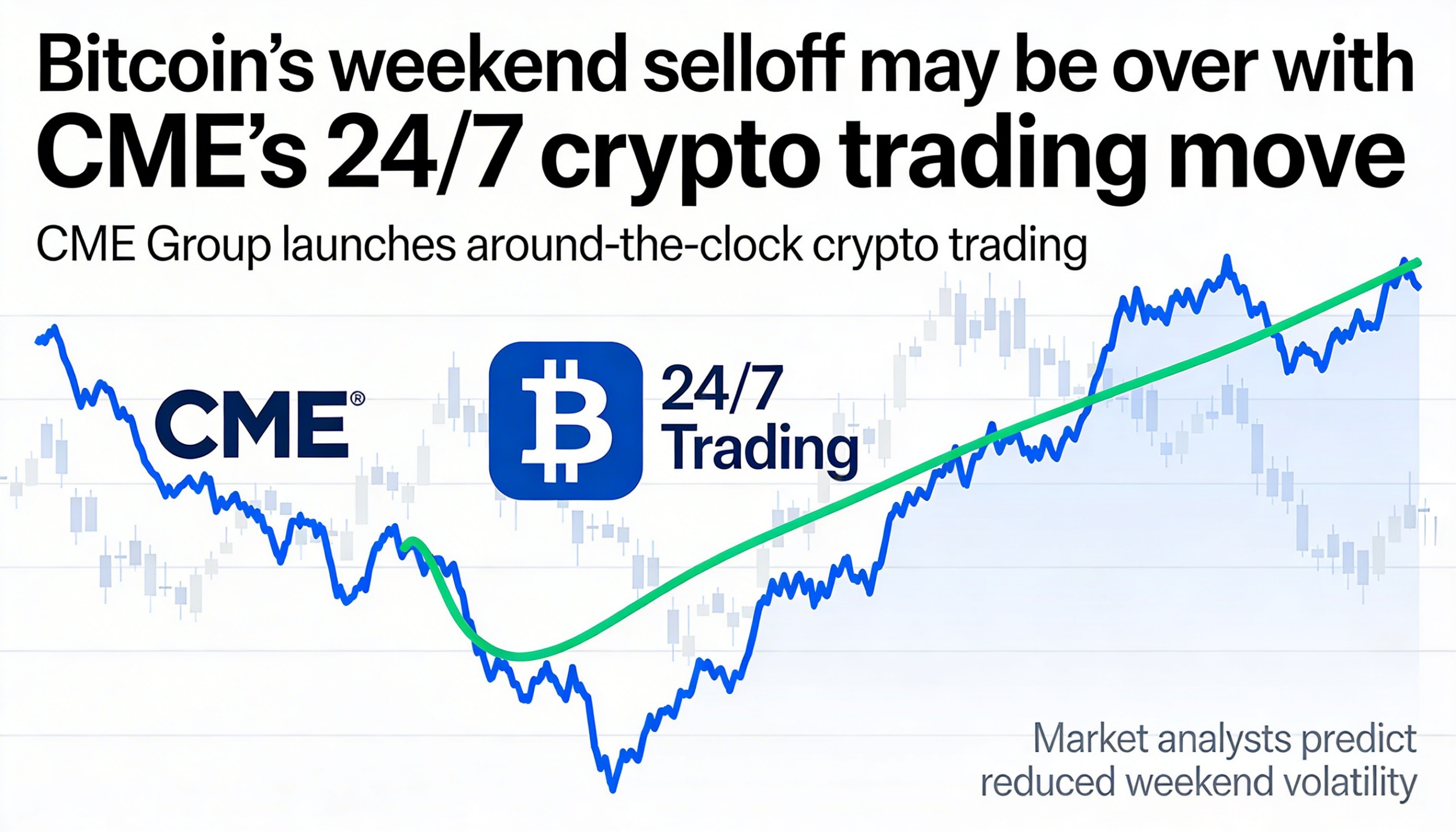
The Chicago-based exchange, widely used by Wall Street institutions, announced it will launch 24/7 trading for its crypto futures and options contracts on May 29. The change marks a significant shift in how traditional financial firms access and manage exposure to digital assets.
According to the company, the decision reflects rising demand from professional investors seeking continuous risk management. Crypto markets operate without interruption, but institutional trading venues have historically closed over the weekend — a period often associated with heightened volatility.
Tim McCourt, CME’s global head of equities and FX, said the expansion was driven by sustained growth in the firm’s crypto derivatives business. Notional trading volume across its crypto products reached a record $3 trillion last year. Client demand for digital asset risk management tools, he noted, is at unprecedented levels.
Weekend volatility and “CME gaps”
Although spot crypto markets trade 24/7, CME’s regulated futures and options have traditionally closed on Friday evening and reopened Sunday. This schedule created so-called “CME gaps” — price differences between the Friday close and Sunday reopen — exposing institutional participants to weekend price swings without the ability to hedge positions.
Market observers argue that continuous trading could significantly reshape weekend market structure. Bobby Ong, co-founder of CoinGecko, said the most extreme price moves frequently occur when institutional venues are offline. Weekend liquidation cascades, he added, have long been a byproduct of fragmented and thin liquidity conditions.
By removing the trading halt, CME may reduce the structural imbalance that has historically amplified weekend volatility.
Narrower spreads, smoother price action
Adam Haeems, head of asset management at Tesseract Group, described the move as closing one of the final structural gaps between crypto-native markets and regulated derivatives infrastructure.
Institutional capital that previously paused over the weekend will now be able to remain active, potentially lowering the cost and risk of maintaining positions. Haeems said weekend volatility has partly stemmed from this mismatch between always-open spot markets and limited institutional access. Continuous trading could compress spreads and lead to more gradual price movements.
However, he cautioned that round-the-clock availability does not automatically ensure deep liquidity. Institutional trading desks may not operate with full staffing or risk appetite outside standard business hours. As a result, improvements in weekend stability are expected to develop incrementally rather than immediately.
Retail traders may notice fewer abrupt price gaps at the start of the week. Historically, CME gaps have filled more than 90% of the time, serving as a widely watched signal for short-term traders. With uninterrupted trading, those technical patterns could become less pronounced.
Bitcoin’s evolving macro role
Maxime Seiler, CEO of STS Digital, said the shift offers institutions a more stable venue for derivatives trading, particularly for firms cautious about forced liquidation mechanisms on crypto-native exchanges.
He also suggested the change could reinforce bitcoin’s role as a macro risk instrument. With traditional markets closed over the weekend, bitcoin may increasingly act as a real-time proxy for global risk sentiment, reflecting geopolitical or economic developments as they unfold.
By aligning institutional derivatives access with the always-on nature of digital asset markets, CME’s move could gradually redefine how liquidity, volatility, and risk transfer function outside traditional trading hours.
Share this content: