Bitcoin’s latest weekend retreat underscores a recurring pattern: when geopolitical shocks erupt outside traditional trading hours, crypto markets often take the initial hit. With Bitcoin trading around the clock, it remains one of the few major assets investors can quickly exit while equities and bonds are closed.
After briefly climbing back above $65,000, bitcoin slipped to around $64,700 as tensions tied to Iran escalated on Saturday. Iranian state media reported at least 70 fatalities in Hormozgan province, according to Al Jazeera, including casualties from a strike on an elementary school. Israel activated air raid alerts following fresh missile launches from Iran.
Former U.S. President Donald Trump told The Washington Post that his goal was “freedom for the people.” Meanwhile, NATO said it was closely monitoring the situation, China urged an immediate ceasefire, and Turkey offered to facilitate mediation efforts.
Bitcoin’s failure to sustain gains above $65,000 signals that near-term sellers remain in control. However, given the severity of the headlines, the relatively contained price action may reflect thin weekend order books rather than aggressive liquidation. Traders remain sensitive to further developments as U.S. market hours approach.
Earlier slide toward $63K
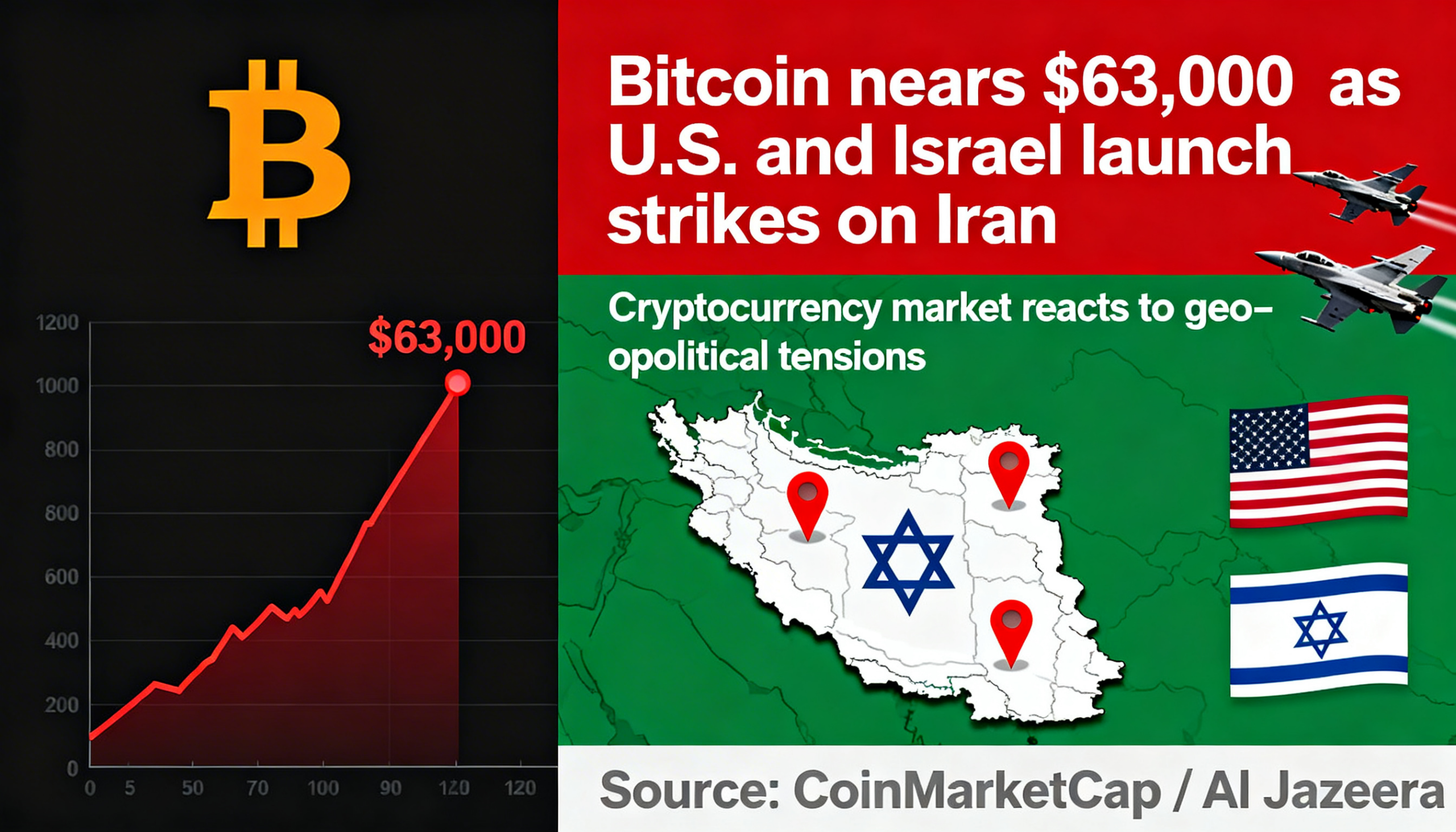
Earlier in the session, bitcoin fell toward $63,000 after the U.S. and Israel carried out military strikes on Iran, knocking the token down roughly 3% within hours. The drop marked its weakest level since the Feb. 5 correction, when prices briefly dipped below $60,000.
Israeli Defense Minister Israel Katz declared a nationwide state of emergency. A U.S. official confirmed American involvement in the strikes, according to The Wall Street Journal.
The reaction follows a well-established market dynamic. With stock and bond markets closed over the weekend, bitcoin frequently acts as a release valve for broader risk-off sentiment, absorbing selling pressure that might otherwise spill into equities, commodities, or currencies during regular trading hours.
The escalation raises the risk of a wider regional conflict in a strategically critical area, following weeks of U.S. military buildup and stalled negotiations over Iran’s nuclear program.
Share this content: