Why Ripple’s 9-Year Roadmap Is Polarizing the XRP Ecosystem
Australian lawyer and XRP commentator Bill Morgan has sparked renewed discussion after urging Ripple to reduce the amount of XRP it re-locks from its monthly 1 billion escrow releases. He argues that accelerating full circulation could strengthen XRP’s narrative as a hard-money-like asset and help eliminate the persistent supply overhang that continues to weigh on sentiment.
Although the idea itself has been raised before, Morgan’s latest framing brings sharper focus to the issue. Ripple’s CTO Emeritus has already made clear that there are limits to how far the company is willing to adjust its escrow framework.
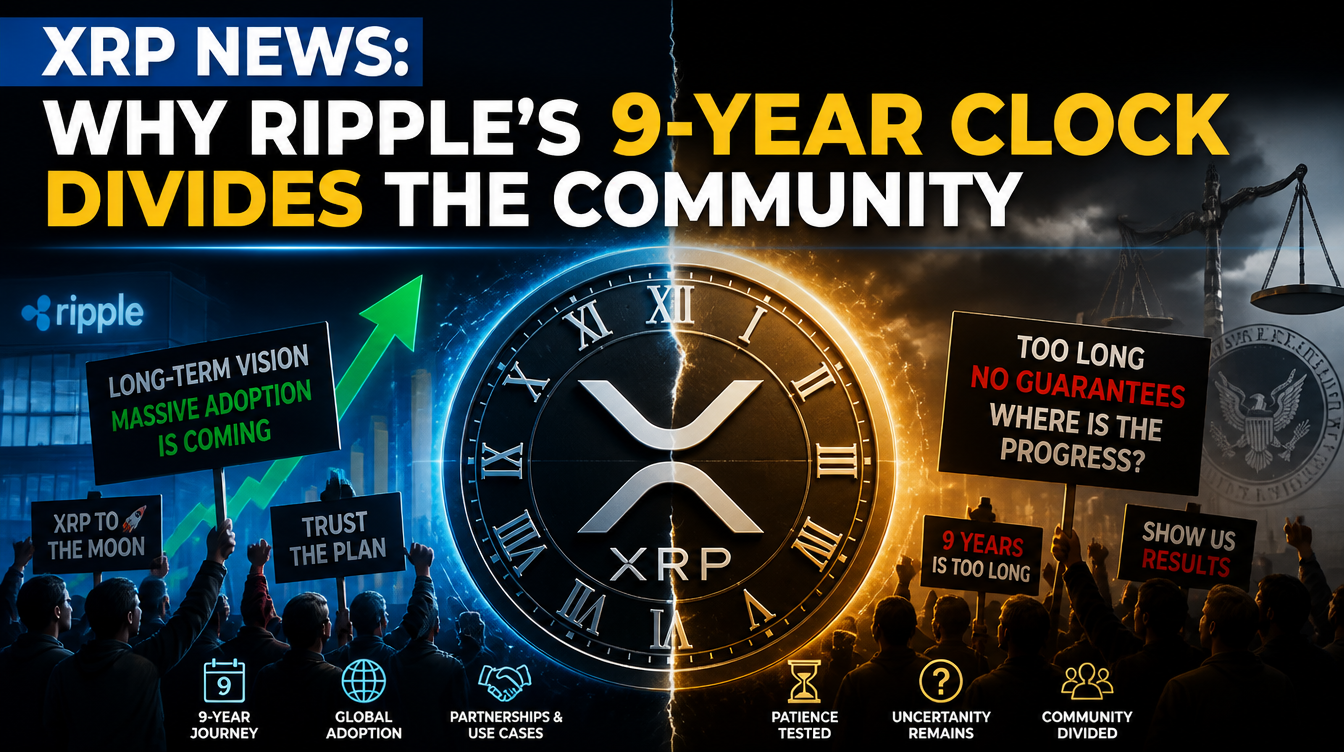
With around 32.74 billion XRP still locked and the current release structure pointing to roughly a nine-year path to full circulation, the mechanics of the system give weight to Morgan’s position. The debate now centers on whether the perceived supply overhang is truly restrictive—and whether Ripple has both the motivation and flexibility to shorten the timeline.
XRP escrow mechanism and supply dynamics
Ripple introduced its escrow system in 2017 by locking 55 billion XRP into 55 on-ledger contracts, each releasing 1 billion XRP at the start of every month. The design aimed to ensure predictable issuance and prevent sudden, large-scale supply shocks from Ripple’s holdings.
Over time, however, the system has effectively become a rolling schedule. Ripple allocates what it needs for operations and institutional distribution, then re-locks the remaining XRP into new escrow contracts, continuously extending the release horizon.
This structure carries several implications. Lowering relocks would bring forward the full circulation timeline. Faster distribution could reduce concerns about hidden or delayed supply. And a fully circulating token supply is often viewed as more appealing to institutional investors who prefer clear, fixed issuance schedules over uncertain future unlocks.
Morgan has previously defended the escrow model against accusations that it is designed to suppress price. He has also noted that XRP still rose from about $0.50 to over $3.00 between late 2024 and early 2025, even while monthly releases continued. His current argument focuses on speeding up what he considers a legitimate and structured distribution process.
David Schwartz’s stance
Ripple CTO Emeritus David Schwartz has not supported accelerating escrow releases and has rejected more aggressive ideas, including burning the escrowed XRP supply entirely.
He has referenced Stellar’s token burn as an example, arguing that supply reductions typically generate only short-term price reactions rather than sustained valuation improvements. In his view, Ripple’s existing approach—relocking unused XRP—is intentional and designed to preserve predictability and stability.
This aligns with Ripple’s broader philosophy that controlled issuance is a feature, not a flaw. Any acceleration would require balancing potential benefits against the risk of increased short-term selling pressure, a trade-off Ripple has so far avoided.
Recent regulatory developments, including MiCA-related progress in Europe, further reinforce Ripple’s emphasis on compliance and predictable token economics as part of its institutional positioning.
What the debate reveals about XRP
At its core, the discussion reflects two competing interpretations of XRP’s role. One camp, aligned with Morgan, views full circulation as key to a “hard money” narrative where valuation is driven purely by demand. The other sees Ripple’s managed release schedule as essential for institutional credibility and orderly market structure.
A third concern underlies both views: if supply increases faster without a corresponding rise in demand, additional tokens could translate directly into greater selling pressure. Current price behavior does not clearly indicate that demand is strong enough to absorb a meaningfully faster release schedule without impact.
Ultimately, the debate highlights a deeper question about XRP’s identity—whether controlled supply is a structural strength that supports adoption, or a constraint that delays its evolution toward full market maturity.
Share this content: