Ripple’s EU License Push Drives RLUSD Higher as XRP Hovers at Key $1.10 Zone
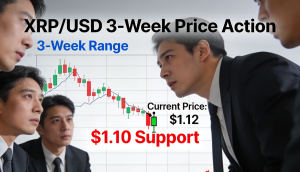
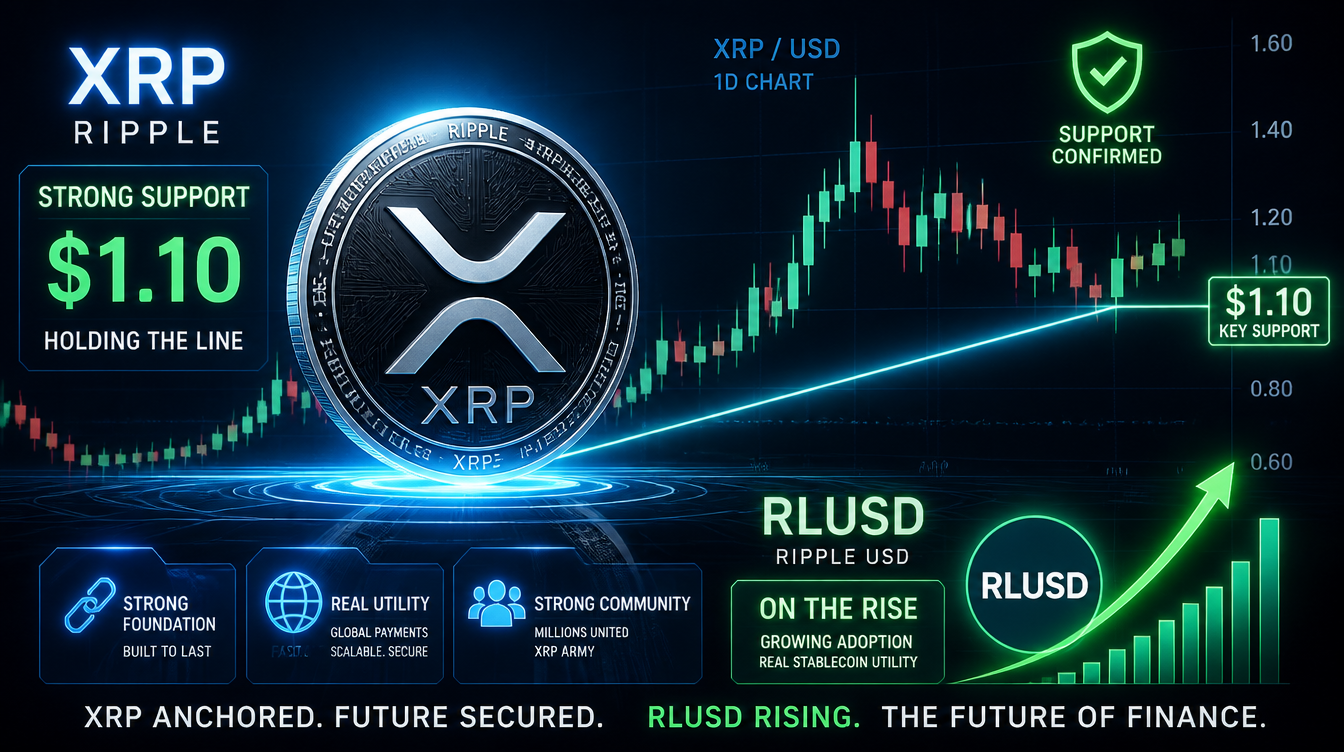
Ripple has gained preliminary Crypto Asset Service Provider (CASP) approval from Luxembourg’s CSSF under the EU’s MiCA framework, but the development has not translated into support for XRP. The token declined 3% following the announcement and is trading around $1.10, down roughly 5% over the past 24 hours as broader market sentiment remains weak.
Although the regulatory milestone is meaningful, it has not acted as a catalyst for XRP. Ripple’s announcement focused primarily on its RLUSD stablecoin and payments infrastructure, with XRP referenced only as an underlying component rather than a central driver.
The CASP approval allows Ripple to deliver regulated crypto services across all 30 countries in the European Economic Area. However, it does not introduce a direct demand pathway for XRP.
The approval is currently conditional, issued as a “Green Light Letter,” and remains subject to final requirements before full MiCA authorization is granted. Once completed, the CASP license, alongside Ripple’s existing Electronic Money Institution (EMI) license in Luxembourg, would position the company as fully compliant under the framework.
Functionally, the approval strengthens Ripple’s payments infrastructure, particularly around RLUSD distribution. The company is offering a unified platform enabling banks, fintechs, and corporates to manage collections, foreign exchange, and payouts across Europe through a single integration.
However, a key regulatory detail remains unresolved. While the CASP license covers crypto services, stablecoin issuance requires separate approval under MiCA’s e-money rules. Ripple has highlighted RLUSD’s role without clearly defining its regulatory status, especially given the restrictions placed on non-euro stablecoins used within the EU.
By comparison, Tether’s USDT has faced limitations in Europe, while Circle has brought USDC and EURC into compliance via its EMI structure. RLUSD’s position within this regulatory landscape remains uncertain, which could influence institutional adoption.
Ripple is also arriving later than many of its competitors. MiCA became fully applicable in December 2024, with firms such as Circle, B2C2, OKX, Coinbase, and Kraken securing approvals throughout 2025.
The company’s key differentiator is its combined EMI and CASP framework, offering a fully regulated, end-to-end payments rail. Supported by more than $100 billion in transaction volume across 60+ markets and over 75 licenses globally, the platform presents a strong enterprise proposition—but one that does not inherently drive demand for XRP.
This disconnect has drawn criticism from the XRP community, particularly as Ripple continues to emphasize RLUSD while XRP performance lags. Meanwhile, RLUSD still faces additional regulatory steps beyond Europe, including oversight requirements in California.
Overall, the latest announcement reinforces an ongoing trend: Ripple is building a compliant global payments infrastructure centered on RLUSD, with XRP functioning more as background infrastructure. As a result, the MiCA approval has had limited immediate impact on XRP’s price action.
Share this content: