After Massive Bitcoin Profits, Early Adopters Are Building Personal Security Empires
Bitcoin OGs Are Spending Millions on Armored Vehicles, Bunkers, and Survival Infrastructure
For some of Bitcoin’s earliest and wealthiest investors, protecting crypto wealth now extends far beyond hardware wallets and private keys.
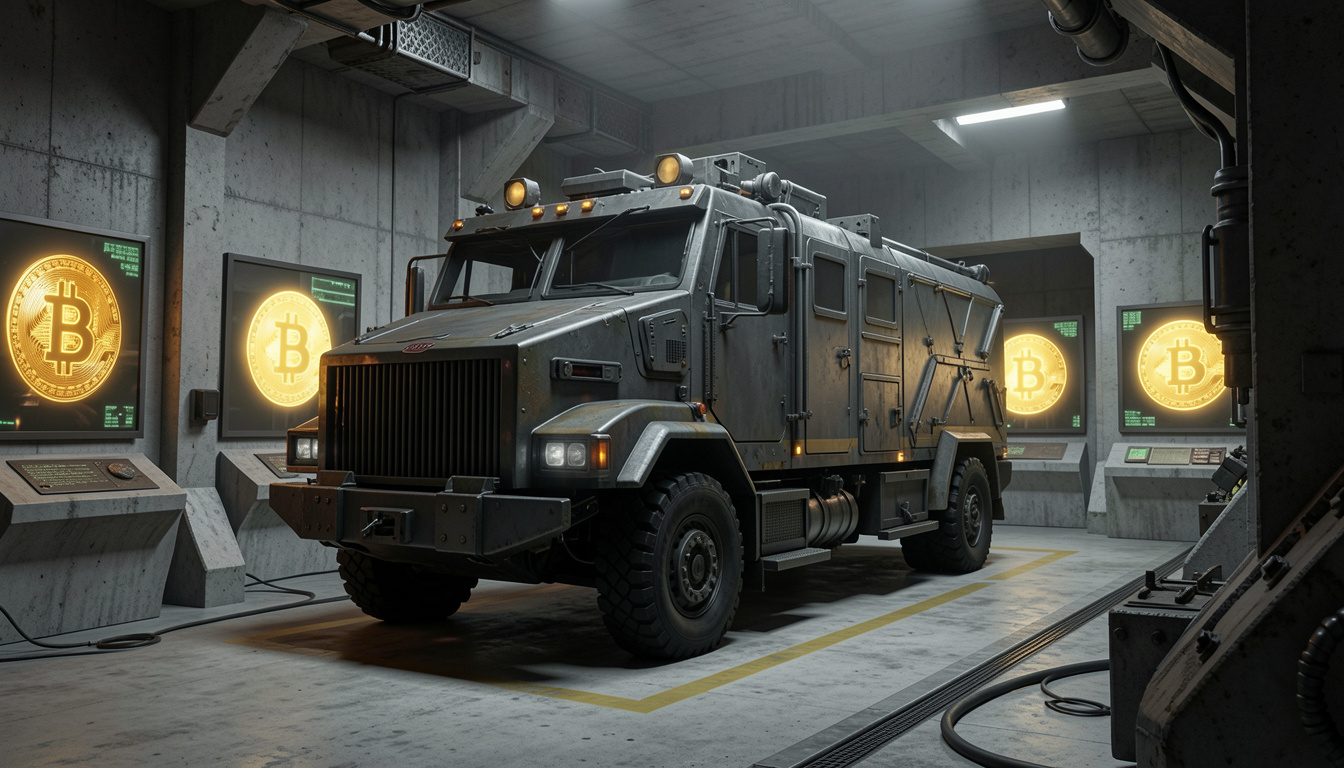
A growing number of Bitcoin OGs and crypto executives are channeling a portion of their gains into physical security assets, ranging from armored vehicles to underground bunkers and self-sufficient compounds.
The trend became more visible after Marathon Digital Holdings (MARA) disclosed in its latest proxy filing that it spent $869,160 on armored vehicle upgrades for CEO Fred Thiel and CFO Salman Khan. The company allocated $430,780 for Thiel and $438,380 for Khan, while their total annual security-related compensation reached $4.3 million and $3.9 million, respectively.
The filing signals how dramatically the risk profile of crypto wealth has evolved. Unlike traditional assets, large cryptocurrency holdings can be transferred almost instantly, making high-net-worth investors potential targets for physical coercion and extortion.
MARA is far from alone. Last year, Coinbase reported spending $7.6 million on personal security measures for CEO Brian Armstrong, including executive protection, secure transportation, residential security, and family protection services.
Together, the disclosures reveal more than $16 million in security spending by executives at two major crypto firms in a single reporting period—a sign that physical protection is becoming an increasingly important consideration across the industry.
The movement is deeply connected to Bitcoin’s cypherpunk roots. Long before Bitcoin became a mainstream financial asset, many of its supporters advocated for financial sovereignty, privacy, and reducing reliance on centralized institutions. Discussions about economic instability, self-custody, and preparing for systemic disruptions were common themes within early Bitcoin communities.
As Bitcoin’s value surged over the years, those ideas evolved from online debates into real-world investment strategies.
Today, some wealthy Bitcoin holders are purchasing rural estates, fortified residences, off-grid compounds, second citizenships, and underground shelters designed to withstand a range of potential disruptions. The so-called “Bitcoin citadel”—once an internet meme describing a secure community where Bitcoin holders could retreat during a financial collapse—has increasingly become a blueprint for how some investors think about long-term resilience.
The private market is responding accordingly. Companies specializing in luxury bunkers and hardened real estate report rising interest from ultra-high-net-worth individuals seeking protection from geopolitical tensions, civil unrest, cyber threats, and broader economic uncertainty.
For investors who accumulated Bitcoin when it traded below $1,000, dedicating a small percentage of their holdings to physical security infrastructure may seem like a logical trade-off. If worst-case scenarios never materialize, they gain secure properties and enhanced protection. If they do, the investment could prove invaluable.
As cryptocurrency wealth continues to grow, the industry’s approach to security appears to be shifting from digital defense alone toward a combination of cyber protection and real-world resilience.
Share this content: