
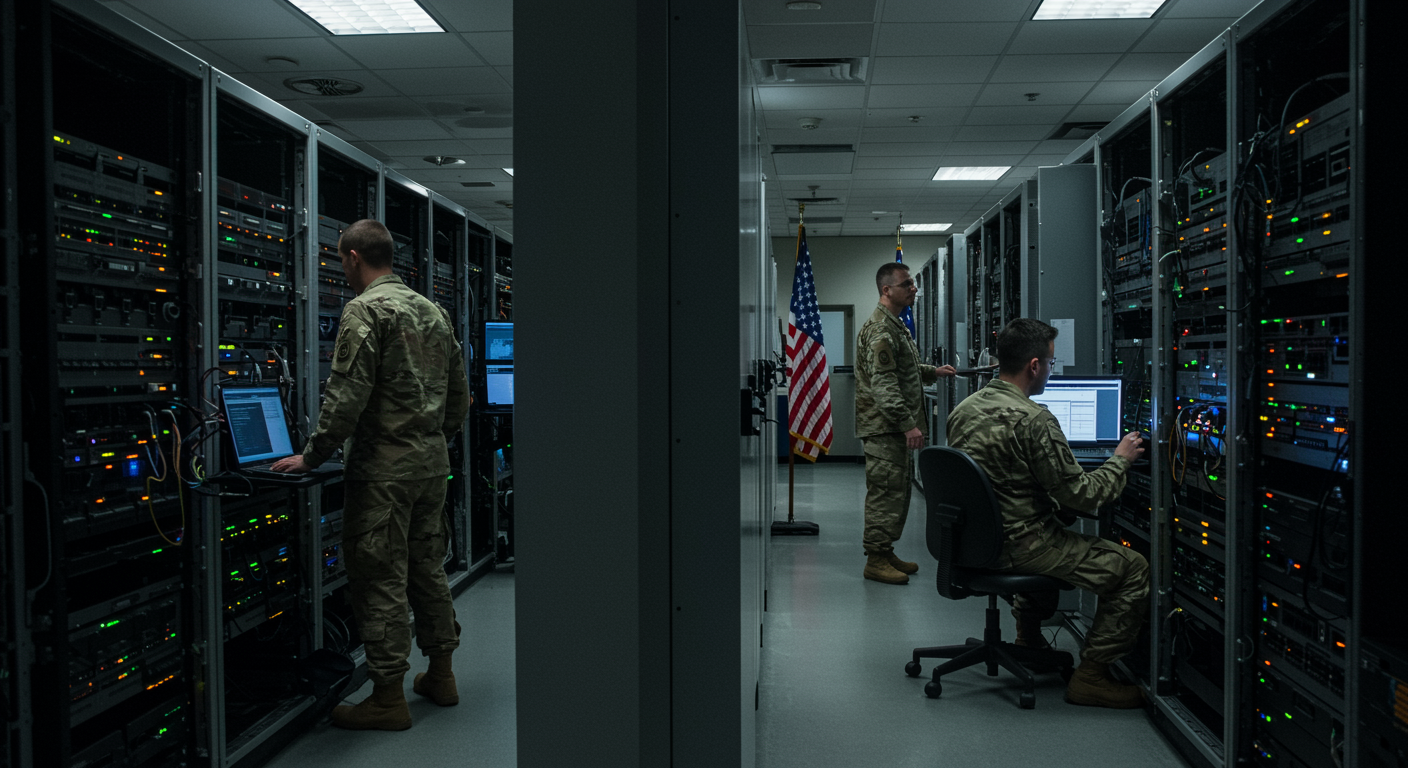
Admiral Samuel Paparo, head of U.S. Indo-Pacific Command, told lawmakers this week that the military is actively operating a live Bitcoin node as part of cybersecurity testing, while also viewing the technology as a potential instrument of national power in its strategic competition with China.
The four-star Navy admiral revealed the effort during testimony before the House Armed Services Committee on Wednesday, following remarks to the Senate Armed Services Committee a day earlier in which he described Bitcoin as having “incredible potential” for U.S. power projection and national security applications.
Paparo’s comments mark the first public confirmation from a sitting U.S. combatant commander that the military is directly participating in the Bitcoin network.
“We currently have a node on the Bitcoin network,” Paparo said in response to questions from Representative Lance Gooden. “We’re not mining. Instead, we’re using it for monitoring and conducting operational tests focused on securing and defending networks through the Bitcoin protocol.”
A Bitcoin node is a computer that maintains a complete copy of the blockchain, verifies transactions, and helps enforce the network’s rules by relaying data across its decentralized, peer-to-peer system. Unlike mining, running a node does not generate rewards and does not require specialized hardware.
Operating a node allows participants to independently verify the network’s state without relying on third parties. As of early 2026, there are an estimated 15,000 to 20,000 publicly reachable full nodes worldwide, with the true figure likely higher due to nodes operating behind firewalls.
The addition of a single node—even by a major institution like the U.S. military—does not threaten Bitcoin’s decentralization or its resistance to centralized control.
Still, the involvement of INDOPACOM is notable. The command oversees U.S. military operations across the Indo-Pacific region, a key arena in geopolitical tensions with China. Bitcoin’s architecture has long been promoted as resilient against interference from powerful states, making the military’s participation a symbolic development in the evolving intersection of digital assets and global strategy.
Share this content: